


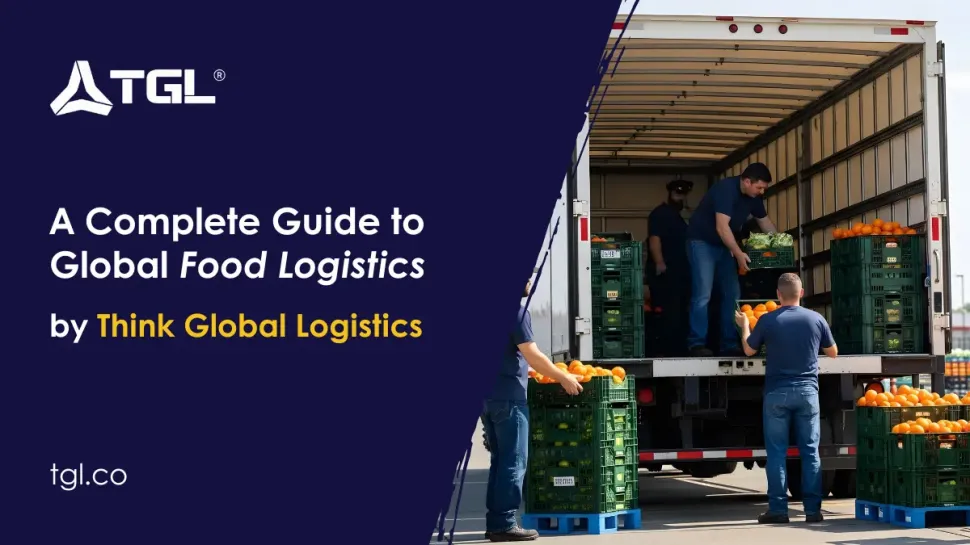
Food on freight is one of the most critical yet complex components of the global supply chain. Each day, food transfers borders in the form of airfreight, oceanfreight, road transport, and rail networks in tons of millions. Whether it is fresh products or frozen foods, packaged and processed foodstuff, to move food safely and promptly, it needs complex logistic planning, regulatory adherence, and temperature controlled transportation.
Logistics providers are important in a world where consumers demand fresh, safe, and high quality food, without regard to the season or the geography. Think Global Logistics is a company that deals with food logistics services that provide efficient, safe, and complete delivery of food products in accordance with international regulations.
This comprehensive guide explores food on freight, the challenges of food transportation, and how Think Global Logistics supports the global food supply chain through technology-driven, sustainable, and reliable freight solutions.
What Is Food on Freight?
Food on freight refers to the transportation, handling, and distribution of food products across domestic and international supply chains. Food freight forwarding is unlike general cargo, as it needs specialised infrastructure, high standards of compliance, and environmental constraints.
Food freight includes:
- Fresh fruits and vegetables
- Frozen and chilled foods
- Meat, poultry, and seafood
- Dairy products
- Dry and packaged food items
- Beverages and processed foods
The demand of each category is different, which is connected with temperature control, shelf life, hygiene, packaging, and transit speed.
The Importance of Food Logistics in the Global Economy
Global Food Supply Chain Connectivity
Food logistics in the global food supply chain are very critical. A lot of countries import a substantial amount of their food and food shipping solutions should be reliable in terms of food security and economic stability.
The Think Global Logistics integrates food producers and exporters, importers, distributors and retailers in global markets with integrated freight solutions.
Changing Consumer Expectations
Modern consumers demand:
- Year-round availability of fresh food
- Transparent sourcing and traceability
- Fast delivery and consistent quality
Meeting these expectations requires advanced international food logistics capabilities.
Key Challenges in Food on Freight
Perishable Food Transportation
Transportation of perishable food is of a high risk as it is time sensitive. Late deliveries, poor temperature changes or mishandling can lead to spoilage, loss of money and safety issues.
Think Global Logistics is able to reduce these risks by undertaking effective planning and real-time monitoring.
Cold Chain Logistics and Temperature Control
Logistics Cold chain logistics are required in food products that need a low temperature. The interruption of the cold chain may affect the food safety and shelf life.
Think Global Logistics ensures cold chain integrity through:
- Reefer containers and vehicles
- Temperature-controlled warehousing
- Continuous temperature monitoring
- Compliance documentation
Food Safety Regulations and Compliance
Food freight forwarding must comply with international food safety regulations, including:
- Sanitary and phytosanitary (SPS) requirements
- Health certifications
- Import/export documentation
- Labelling and traceability standards
Think Global Logistics manages regulatory compliance across multiple jurisdictions, reducing delays and risks.
Packaging and Handling Standards
Food packaging should be free of contamination and physical damages. Think Global Logistics recommends the correct packaging and handling standards to be used by the clients to ensure quality during transit.
Think Global Logistics: Experts in Food Freight Forwarding
Think Global Logistics is a reputable food logistics service provider that offers specialized services to companies that are in the global food markets.
Customized Food Shipping Solutions
Each food product is associated with different logistics needs. Think Global Logistics develops bespoke freight plans that are grounded on:
- Product sensitivity
- Destination regulations
- Transit urgency
- Cost efficiency and sustainability

End-to-End Food Logistics Services
End-to-end visibility in the food supply chain provided by Think Global Logistics includes:
- Origin pickup and consolidation
- International freight forwarding
- Customs clearance
- Warehousing and distribution
- Last-mile delivery
This combined practice enhances efficiency, transparency and reliability.
Multimodal Transportation for Food on Freight
Air Freight for Perishable and High-Value Food
Air freight is ideal for:
- Fresh seafood
- Exotic fruits
- Premium food products
Think Global Logistics makes sure that it has been delivered fast and under temperature to maintain freshness.
Ocean Freight for Bulk Food Shipping
Large quantities of frozen and packaged foods can be shipped by ocean freight that is cost-effective. Think Global Logistics operates reefer containers, port coordination and transit monitoring of safe delivery.
Road and Rail Transport for Regional Distribution
Farms, processing facilities, ports, and distribution centres are linked by road and rail transportation. Think Global Logistics has smooth multimodal move-overs.
Technology in Modern Food Logistics
Technology is of primary importance in enhancing food logistics efficiency and visibility.
Think Global Logistics uses:
- Real-time shipment tracking
- Temperature and condition sensors
- Digital documentation systems
- Predictive analytics for risk management
These tools enable proactive decision-making and improved supply chain control.
Sustainable Food on Freight Solutions
Reducing Food Waste
Effective food logistics minimizes losses in food spoilage. Think Global Logistics aims at maximising transit time and management practices to ensure food is not spoilt.
Environmentally Responsible Freight
Think Global Logistics supports sustainability through:
- Route optimization
- Consolidated shipments
- Efficient transport planning
These initiatives help reduce the carbon footprint of food transportation.
Supporting Food Businesses Across the Supply Chain
Food Producers and Exporters
Think Global Logistics assists food producers to enter foreign markets with adequate and effective uses of logistics in a manner that is compliant.
Importers, Distributors, and Retailers
Retailers also enjoy good supply of inventory, minimized stocking, and reliability of delivery time schedules.
Risk Management in Global Food Supply Chains
The global food supply chains are exposed to climate incidences, port congestion and geopolitical uncertainty. Think Global Logistics establishes resilience by:
- Alternative routing strategies
- Contingency planning
- Strong global logistics partnerships
The Future of Food on Freight
The future of food logistics will be driven by:
- Digital transformation
- Stricter food safety standards
- Increased supply chain transparency
- Sustainability-focused logistics
Think Global Logistics continues to invest in innovation to meet evolving global food logistics demands.
FAQ’S
What is food on freight?
It is the transportation of food products across domestic and international supply chains.
Why is temperature control important in food logistics?
It prevents spoilage and maintains product quality during transit.
Which foods need cold chain shipping?
Perishables like meat, seafood, dairy, fruits, and frozen items.
What causes delays in food freight?
Documentation issues, route disruptions, and temperature handling errors.
How does Think Global Logistics ensure food safety?
By using real-time tracking, certified packaging, and strict compliance.
Conclusion
Food on freight is the backbone of the global food system. It involves accuracy, skill and responsibility. Think Global Logistics is a company that provides end to end food freight forwarding solutions that focus on safety, compliance, efficiency and sustainability.
Through its knowledge of the industries, innovative technology and customer-oriented solutions, Think Global Logistics is able to help food enterprises achieve success in the international markets both in the present and in the future.